
Water Cremation: A More Sustainable After-Death Choice Currently Not Available in BC
Most people in British Columbia are familiar with the options available on how to treat our bodies after death: burial or flame cremation. But there are other forms of body disposition that exist – including one that uses water instead of fire.
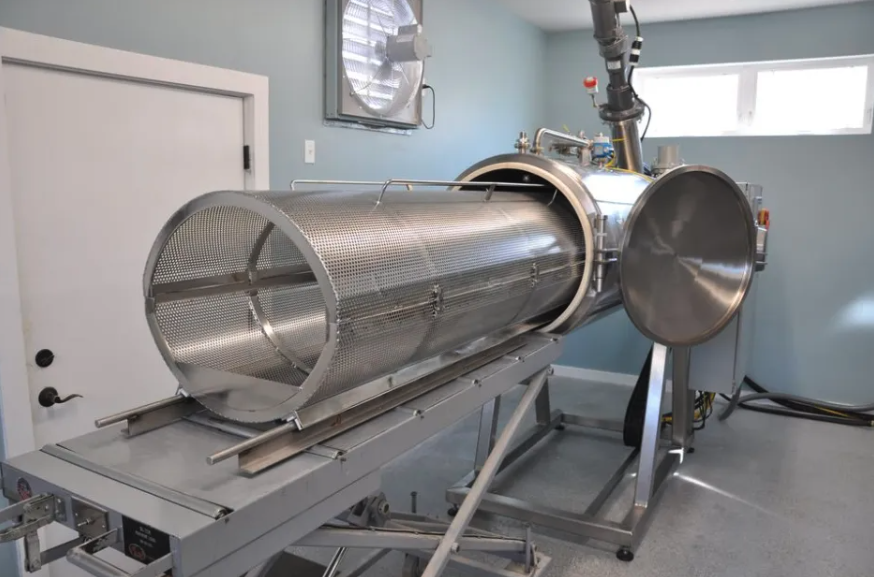
Water cremation, formally known as alkaline hydrolysis (and sometimes called aquamation, resomation, and flameless cremation), uses water, heat, and an alkaline solution to speed up the natural process that occurs when a body decomposes.
It offers another way of treating our bodies after death, and it’s one that is attracting interest from people seeking alternatives that have a lower environmental impact.
Note: I’m choosing to give this topic a dedicated page on my website because I feel it’s an important yet extremely overlooked issue that we can all take action on by writing to the Attorney General of BC (instructions follow).
How does water cremation work?
The body is placed in a specialized vessel that contains about 95% water and 5% alkaline solution (sodium or potassium hydroxide). The body may be clothed or shrouded in a natural, biodegradable material like silk or wool. The combination of water, heat, alkalinity, and circulation accelerates the breakdown of the body’s soft tissues.
At the end of the process (which can take between 3 to 16 hours depending on the equipment and temperature used), the bones remain. As with fire cremation, they are processed into a fine material that’s similar in feel to sand that can be returned to the family in an urn or other container.
Unlike with flame cremation, metals such as dental fillings and medical implants are not burned during the process and can be recovered.
What happens to the liquid?
The remaining liquid is primarily water which contains organic compounds like amino acids, salts, sugars, and peptides. The liquid is cooled and neutralized according to strict municipal standards before being released into the wastewater system, where it is processed along with other wastewater.
This aspect of water cremation can feel uncomfortable and unfamiliar, particularly because our culture is accustomed to burial and burning. However, when we learn about what actually happens during different forms of body disposition, it helps us make choices based on knowledge and values instead of what is simply familiar.
A lower impact alternative to flame cremation
According to the David Suzuki Foundation, conventional flame cremation requires temperatures of approximately 650-1,090°C (1,200–1,995°F) and produces an estimated 243 kg (535 lb) of carbon dioxide per cremation. That’s roughly equivalent to driving an average gas-powered vehicle 980 kilometres (609 miles).
With water cremation, because there is no combustion, it avoids the fossil fuel emissions associated with flame cremation. It also operates at much lower temperatures (depending on the system, it may range between 90–160°C (195–320°F).
And despite its name, the amount of water required is relatively little. The David Suzuki Foundation reports that the process uses less water than an average Canadian household uses in one day (see sources at the end of this article).
Independent research studies have found that alkaline hydrolysis has a substantially lower overall environmental impact than conventional flame cremation. The exact footprint of either method varies depending on the technology and energy source used, but for people seeking to minimize the ecological impact of their after-death choices, water cremation is a compelling alternative.
Is water cremation available in Canada?
Yes. It is already permitted in Canada and is used elsewhere in the world, including the US, parts of Europe, Australia, New Zealand, and South America. At the time of this writing (September 2026), alkaline hydrolysis is available in Saskatchewan, Ontario, Quebec, Newfoundland and Labrador, Northwest Territories, and Manitoba.
However, it is currently not a legal body disposition option in British Columbia. People may include it as an after-death preference, but that does not make it available to them.
Interestingly, BC has allowed alkaline hydrolysis to be used for companion animal aftercare for over a decade, and pet aquamation services currently operate in Vancouver. Clearly, legislation governing the disposition of human remains has not followed suit (yet!).
What is happening in British Columbia regarding water cremation?
There has been some activity towards change. In 2024, the Union of BC Municipalities passed a resolution calling for the Province to amend the Cremation, Interment and Funeral Services Act to permit alkaline hydrolysis.
In response, the Province acknowledged increasing public interest in alternative forms of disposition that could reduce environmental impact and provide British Columbians with more choices. It also indicated that research and consultation on alkaline hydrolysis had been started.
Nevertheless, as of today, it is still not a permitted method of body disposition in BC.
Why choice and education matters
There’s no “correct” way to care for a body after death. Some people want a conventional burial, some want flame cremation, and some choose a green or natural burial. Others would opt for water cremation, if it were available.
End-of-life planning is about understanding your options and making choices that reflect what matters to you. If environmental responsibility is important to you, it’s reasonable that you want it to be addressed in your after-death wishes, too.
British Columbians should have the opportunity to make that choice.
Want to help bring water cremation to BC?
If you think alkaline hydrolysis should be made available as a safe and regulated means of body disposition in BC, you can make your voice heard.
I created a letter (see below) that you can use as a template to personalize and send to BC’s Attorney General, Niki Sharma. Adding a sentence or two about why this is important to you can show that there is genuine interest in expanding disposition options in this province. You can email the letter to AG.Minister@gov.bc.ca
You can also cc the letter to your local MLA. While the Attorney General is responsible for legislation governing body disposition options, when you copy your MLA on the correspondence, it lets them know that people in their constituency have a vested interest in the issue.
You can find your MLA and their contact information through the Legislative Assembly of British Columbia website.

Sample Letter
The Honourable Niki Sharma, K.C.
Attorney General of British Columbia
Government of British Columbia
Re: Please make alkaline hydrolysis available in British Columbia
Dear Attorney General Sharma,
I am writing as a resident of British Columbia to ask the Province to allow alkaline hydrolysis, also known as water cremation or aquamation, as a legal and regulated body disposition option in BC.
Alkaline hydrolysis has a significantly lower environmental impact than conventional flame cremation. Rather than using fire, the process uses water, heat, and an alkaline solution to accelerate the natural process of decomposition. It completely avoids the fossil-fuel combustion associated with flame cremation and offers British Columbians an additional option for making end-of-life choices that reflect their environmental values.
Canadian organizations, including the National Collaborating Centre for Environmental Health and the David Suzuki Foundation, have recognized the growing interest in more environmentally sustainable after-death practices and alternatives such as alkaline hydrolysis.
Water cremation is already permitted in several Canadian provinces and territories, yet it remains unavailable in BC. Other jurisdictions have demonstrated that this method can be safely incorporated into existing funeral and disposition regulations. BC should not continue to lag behind when there is growing interest in more sustainable end-of-life choices.
Alkaline hydrolysis has already been used for companion animal aftercare in BC for over a decade, showing that the technology itself is not new to this province.
In 2024, the Union of BC Municipalities endorsed a resolution calling on the Province to amend the Cremation, Interment and Funeral Services Act to permit alkaline hydrolysis. The Province subsequently indicated that it was researching and consulting on alternative forms of disposition, including alkaline hydrolysis.
I am asking the Province to move this initiative forward and make alkaline hydrolysis available as a safe, regulated body disposition option for British Columbians.
This matters to me because {ADD A SENTENCE ABOUT WHY THIS IS IMPORTANT TO YOU}
I ask that you please consider amending the Cremation, Interment and Funeral Services Act to permit alkaline hydrolysis in British Columbia, and provide and update on the progress towards making this option possible.
Thank you very much for your consideration.
{Your name}
{City}
{Postal Code}
Learn more about water cremation
For additional information you can check out the following resources:
National Collaborating Centre for Environmental Health
Alternative Disposition Service: Green Burial, Alkaline Hydrolysis and Human Composting
David Suzuki Foundation
Green End-of-Life Options
Union of BC Municipalities
Legislative Changes to Permit Alkaline Hydrolysis